What Is an RFID Card? Working Principle and Card Types
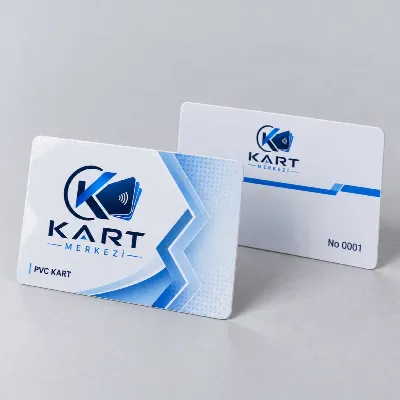
RFID (Radio Frequency Identification) means contactless identification using radio waves. An RFID card is a plastic card containing a chip and an antenna connected to it. When the card is brought close to a reader, the field emitted by the reader powers the chip; the chip then sends its own number or the data in its memory to the reader. The card has no battery; it takes its energy from the reader.
How does an RFID card work?
The system consists of three parts: the card, the reader and the software the reader is connected to. The card only transmits its identity or data; the connected system decides whether the door opens or whether passage through the turnstile is allowed. That is why the same card can do different jobs in different systems; what matters is that the card works on the same frequency and the same standard as the reader.
RFID card types
- 125 kHz proximity card: low frequency, carries a read-only card number. Common in turnstile, door, car park and staff attendance control. Details: 125 kHz proximity cards.
- 13.56 MHz RFID card: high frequency, with a memory that data can be written to (e.g. 1K bytes). Used in hotel door locks, cafeteria and campus payment systems. Details: 13.56 MHz RFID cards.
- NFC card: a card type that works at 13.56 MHz and can be read by a phone; a web address is written into it. Details: NFC cards.
Where are they used?
The most common uses are staff ID and access cards, residential complex and building entrances, hotel rooms, gym memberships, cafeteria and canteen payments, car park barriers and digital business cards. Because a logo, name, photo and number can be printed on the cards, the same card can serve as both an ID card and an access card.
Checklist for choosing the right card
- What is the frequency of your existing reader (125 kHz or 13.56 MHz)?
- Does the system only read the card number, or does it write data to the card?
- Will the card be read by a phone (NFC)?
- Will a name, photo or number be printed on the cards (variable data)?
If you are not sure which card your reader reads, place a small trial order first. We explain the difference between 125 kHz and 13.56 MHz in detail in this guide.
You can compare all printed and blank types on the RFID card types page, and order from the proximity card and 13.56 MHz RFID card categories.
Products on this page
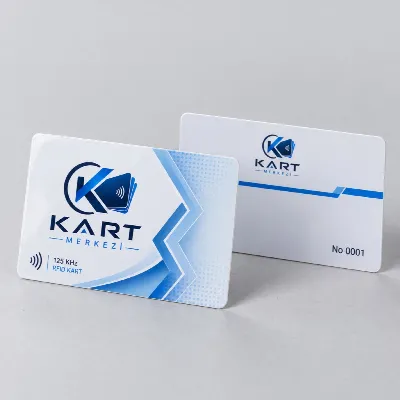
Double-Sided Printed 125 kHz Proximity RFID Card
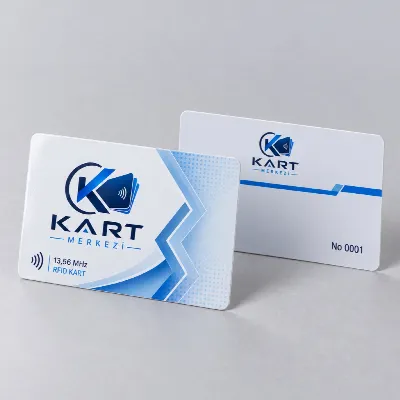
Double-Sided Printed 13.56 MHz RFID Card
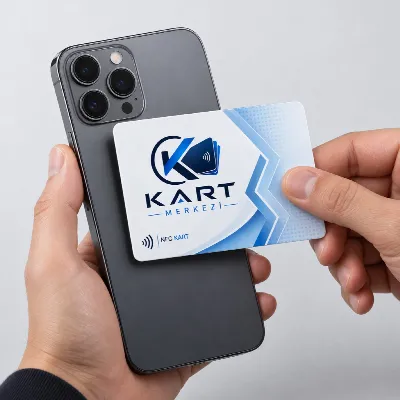
Double-Sided Printed NFC Card
Would you like support with this?
Let's determine the right card type together and send you a sample.