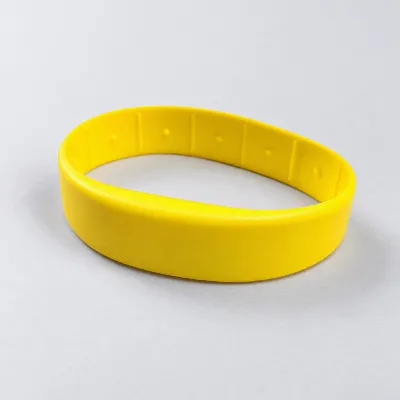
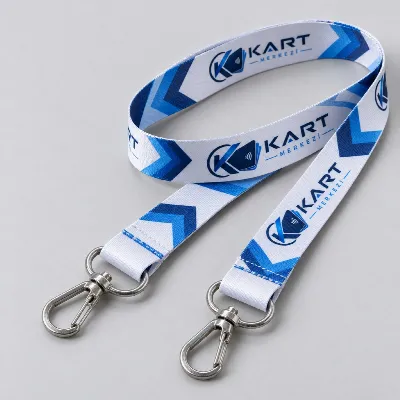
Differences Between 125 kHz Proximity Cards and 13.56 MHz RFID Cards
Short answer: A 125 kHz proximity card carries only a read-only card number and is used with TK4100 / EM compatible readers in turnstile, door, car park and PDKS (time attendance) systems. A 13.56 MHz RFID card works to the ISO/IEC 14443 A standard and data can be written to its 1K byte memory; it is preferred in systems such as hotel locks, canteens and campus cards. Neither type works in the other's reader; find out your reader's frequency before buying cards.
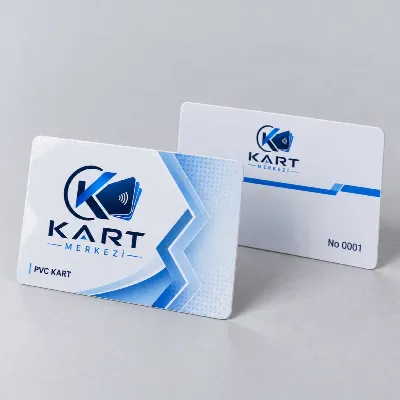
The most common mistake when ordering cards is buying cards that are incompatible with the reader's frequency. 125 kHz and 13.56 MHz cards look the same from the outside; both are credit-card-sized PVC cards. The difference is in the chip inside, and a reader only reads cards of its own frequency.
Comparison
- Frequency: 125 kHz (low frequency, LF) — 13.56 MHz (high frequency, HF)
- Memory: a 64-bit card number that cannot be changed on the 125 kHz card — readable and writable memory on the 13.56 MHz card (e.g. 1K byte)
- Standard: EM / TK4100 compatible chips in 125 kHz cards — ISO/IEC 14443A in 13.56 MHz cards
- Read range: depending on the reader, about 2–3 cm at 125 kHz and about 2–5 cm at 13.56 MHz
- Typical use: 125 kHz for turnstiles, doors, car parks and PDKS — 13.56 MHz for hotel locks, canteen / cafeteria payment, campus cards
What does MIFARE mean?
MIFARE® is the registered trademark of NXP B.V.'s 13.56 MHz product families (MIFARE Classic®, MIFARE Plus®, MIFARE DESFire®, MIFARE Ultralight®). Although it is used in the field like a generic name for 13.56 MHz cards, not every 13.56 MHz card is MIFARE. If your system provider asks for "MIFARE 1K", ask whether this is a requirement for an original NXP chip or a need for an ISO/IEC 14443 A card with 1K byte memory; we explain the differences in our What is a MIFARE® card? guide. Some systems read only the card's number, others write their own data to its memory; in the second case, ask your provider whether the cards can be encoded with the system.
Which one should I choose?
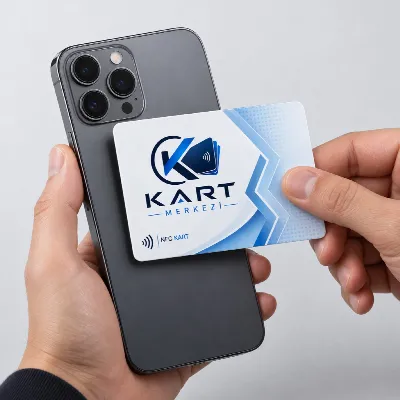
Your reader decides. If you are adding cards to an existing system, find out the type of one of the old cards or the reader model from your system provider. In a newly installed system, if data will be stored on the card (balance, room permissions), choose 13.56 MHz; if only an ID number will be read, 125 kHz is sufficient. If you need a link that can be read by a phone, an NFC card is suitable.
Products: 125 kHz proximity cards · 13.56 MHz RFID cards. For compatibility details, see the RFID card and reader compatibility guide.
MIFARE, MIFARE Classic, MIFARE Plus, MIFARE DESFire and MIFARE Ultralight are registered trademarks of NXP B.V.
Products on this page
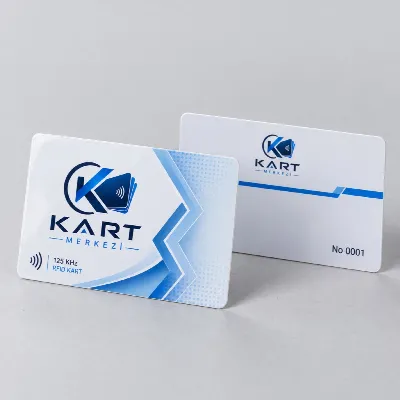
Double-Sided Printed 125 kHz Proximity RFID Card
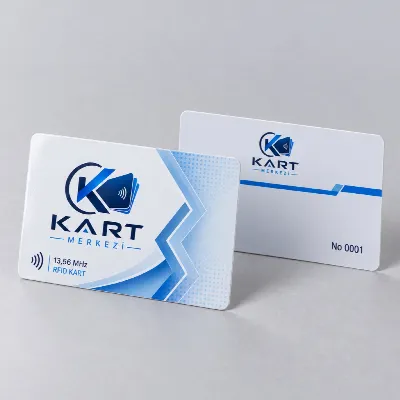
Double-Sided Printed 13.56 MHz RFID Card
Would you like support with this?
Let's determine the right card type together and send you a sample.