What Is a MIFARE® Card? Differences Between Fudan and Original NXP
Short answer: MIFARE® is the brand of NXP B.V.'s 13.56 MHz card chips; 13.56 MHz, on the other hand, is an operating frequency. Fudan chip cards are not NXP products, and whether they work in a system can only be confirmed by testing. Our standard 13.56 MHz cards have Fudan chips; the card with an original NXP MIFARE Classic® EV1 1K chip is at the procurement stage.
In Türkiye, most 13.56 MHz cards are searched for and sold as "Mifare cards". However, MIFARE® is not a frequency or a card type but a company's brand. In this guide, we explain what the brand refers to, what 13.56 MHz is, the difference between Fudan and NXP chips, and which card you should choose for your project.
Who owns the MIFARE brand?
MIFARE is a registered trademark owned by the Netherlands-based semiconductor manufacturer NXP Semiconductors (NXP B.V.). Product families such as MIFARE Classic®, MIFARE Plus®, MIFARE DESFire® and MIFARE Ultralight® are also NXP trademarks. According to NXP's trademark rules, these names may only be used for products made by NXP or under NXP licence; expressions such as "MIFARE compatible" should also not be used for cards carrying another manufacturer's chip, and instead the standard the card conforms to (ISO/IEC 14443 A) should be stated.
13.56 MHz is a frequency, not a chip brand
13.56 MHz is the frequency at which contactless cards operate in the high frequency (HF) band. Most short-range contactless cards at this frequency conform to the ISO/IEC 14443 standard (type A or B). At the same frequency and under the same standard there are chips from different manufacturers such as NXP, Fudan, Infineon and STMicroelectronics; NFC cards read by phone also operate at 13.56 MHz. In other words, the expression "13.56 MHz card" does not tell you the chip's brand, only its operating frequency.
Fudan and NXP: two separate manufacturers
NXP Semiconductors is the owner and manufacturer of the MIFARE product families. Shanghai Fudan Microelectronics, on the other hand, is an independent manufacturer based in China that designs its own smart card chips. Fudan chips are not NXP products; we do not claim NXP approval or certification for our standard cards. We use Fudan chips in our standard 13.56 MHz cards; we do not offer these cards under the MIFARE brand.
Comparison
| Our standard card (Fudan) | MIFARE Classic® EV1 1K (NXP) | |
|---|---|---|
| Manufacturer | Shanghai Fudan Microelectronics | NXP Semiconductors |
| Brand | Not MIFARE | MIFARE Classic® (NXP B.V.) |
| Frequency / standard | 13.56 MHz, ISO/IEC 14443 A | 13.56 MHz, ISO/IEC 14443 A |
| Memory | 1K bytes | 1K bytes (16 sectors × 4 blocks × 16 bytes) |
| Chip model | Model information is being confirmed with the supplier | NXP's MIFARE Classic EV1 family (1K: MF1S50 series) |
| System compatibility | Requires testing per system; cannot be guaranteed for every device | For systems that require an original NXP chip |
| Status on our site | On sale | Not yet in stock – at the procurement stage, not available for sale |
Why does the actual chip model matter?
The expressions "13.56 MHz", "1K" or "ISO/IEC 14443 A" do not define a card on their own. Chips operating at the same frequency and under the same standard differ from model to model in memory structure, card number (UID) length (4 or 7 bytes), supported commands and security features. Lock, payment and access systems are often set up for a specific chip model. That is why finding out which manufacturer's which model your system provider means when they say "1K card" or "Mifare card" is the first step in choosing the right card.
Ways to find out the chip model: check with your system provider or the lock / reader documentation; scan a working card on a phone with an NFC app such as NXP's TagInfo (the app reports the chip type and manufacturer; some phones cannot read this card family); send us the details of your existing card. When buying cards, ask your supplier for the chip manufacturer and model in writing.
Why can compatibility not be guaranteed for every device?
Two cards operating at the same frequency and under the same standard does not mean they will behave the same in every system. Reader and system software may recognise the card only by its number (UID), may write data to the sectors in its memory with their own keys, and may check the card type or manufacturer-specific features. Some hotel lock, payment and access systems are set up to accept only cards with original NXP chips. Reader or software updates can also change the behaviour. That is why only a test can confirm that a card works in your system.
A note on security as well: weaknesses in the encryption method used by the MIFARE Classic family were revealed years ago in published research. For new projects requiring payment or high security, decide together with your system provider which card and encryption method are needed.
What do "MIFARE compatible" and "Fudan" card mean?
On the market, cards carrying 1K-memory 13.56 MHz chips from manufacturers other than NXP are often sold as "MIFARE compatible" or "Fudan cards". The word "compatible" is usually used to say that the card can also be used in systems that read MIFARE Classic® 1K cards; however, it is not the name of a standard or a certification and does not show that the card will work in every system. NXP's trademark rules also require that the expression "MIFARE Compatible" not be used and that the standard the card conforms to (ISO/IEC 14443 A) be stated instead.
That is why we name our Fudan chip cards "13.56 MHz RFID card (Fudan, 1K)" and do not claim MIFARE compatibility. If your system is set up for MIFARE Classic® 1K cards, first try it with a single unprinted card; if it works, move on to printed cards. If your system provider requires an original NXP chip, see the NXP chip card option; it is not yet in stock and is at the procurement stage.
Which card is right for you?
- If the system reads only the card number, or your existing cards have Fudan chips: standard 13.56 MHz RFID card. First try it with a single unprinted card.
- If your system provider, contract or technical specification requires an original NXP MIFARE Classic® EV1 1K: NXP chip card. This option is not yet in stock and is at the procurement stage; message us on WhatsApp for price and delivery time.
- If you are not sure: ask your system provider about the card type and whether there is an "original NXP requirement"; send us the details of one of your existing cards.
- If your system is 125 kHz, none of these cards will work; you need a proximity card. We explain the difference in our 125 kHz vs 13.56 MHz card difference guide.
- If the card will be read by phone: NFC card.
For reader selection and how to find out the card type, see our RFID card and reader compatibility guide, and for all types, see the RFID card types page.
About trademark use
MIFARE, MIFARE Classic, MIFARE Plus, MIFARE DESFire and MIFARE Ultralight are registered trademarks of NXP B.V. On this page, the trademarks are mentioned only for technical information and comparison purposes. RFID İmalat is not an authorised distributor, business partner or certified manufacturer of NXP; NXP and MIFARE logos are not used. Our standard 13.56 MHz cards are not NXP products.
Products on this page
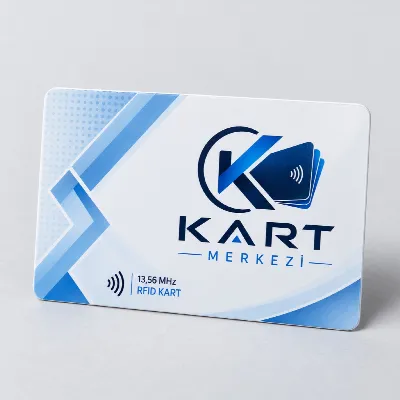
Single-Sided Printed 13.56 MHz RFID Card
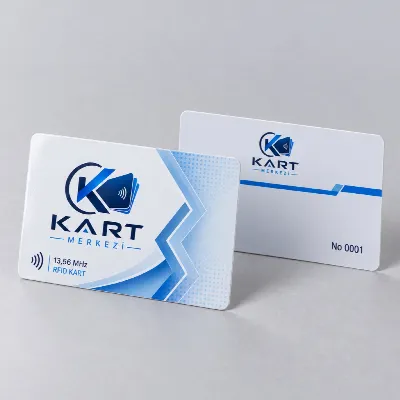
Double-Sided Printed 13.56 MHz RFID Card
Blank 13.56 MHz RFID Card
Would you like support with this?
Let's determine the right card type together and send you a sample.