RFID, Proximity and
NFC Card Manufacturing
125 kHz proximity, 13.56 MHz NFC, PVC and metal cards. Single and double-sided printing, numbering, encoding — all in our own facility.
What do we produce?
Access control, membership, loyalty and promotional cards — with or without a chip, depending on your needs. You can compare the types on the RFID card types page.
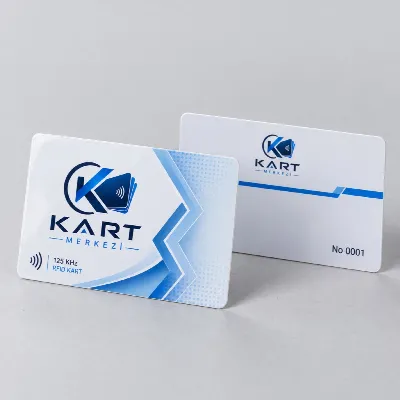
Proximity Card
TK4100 / EM-compatible RFID card for turnstiles, doors and staff entry systems.
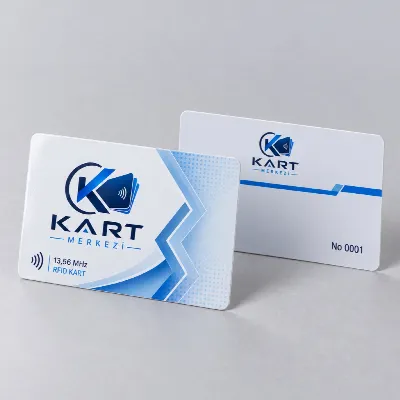
13.56 MHz13.56 MHz RFID Card
ISO/IEC 14443 A card with 1K memory for hotel lock, canteen and campus systems.
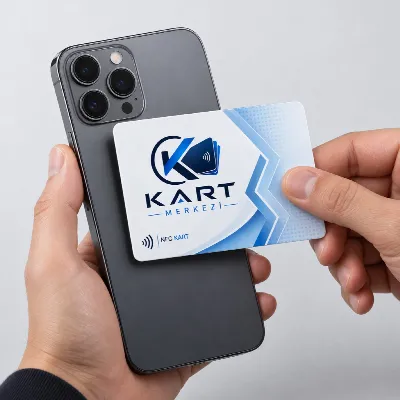
NFCNFC Card
A card that opens a digital business card, menu or review page when tapped on a phone.
9 × 11 cmID Badge
Trade fair, congress and staff ID badges, with a variable name printing option.
LanyardNeck Strap
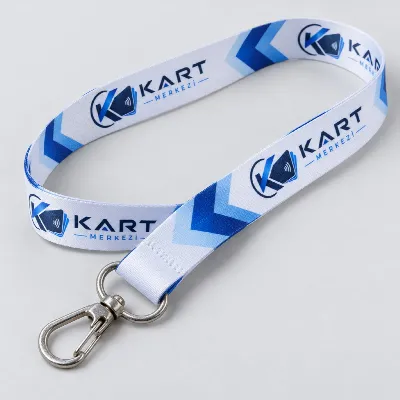
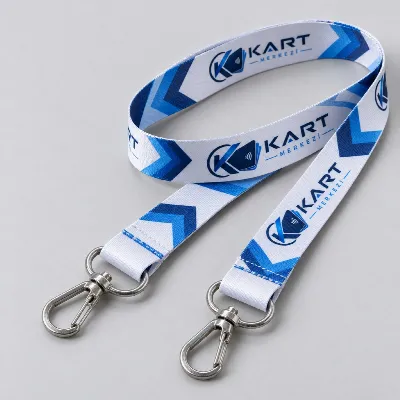
Printed badge lanyard; 15, 20 and 25 mm, single or double-sided, with lock options.
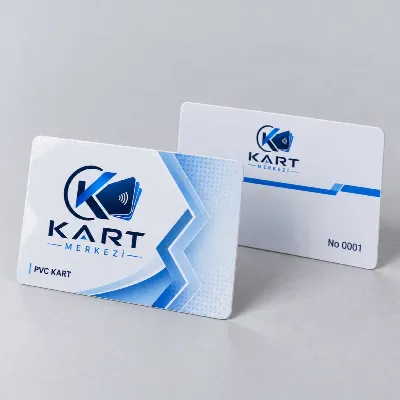
ChiplessPVC Plastic Card
Staff, membership and loyalty cards; full-colour printing on one or both sides.
WristbandSilicone Wristbands
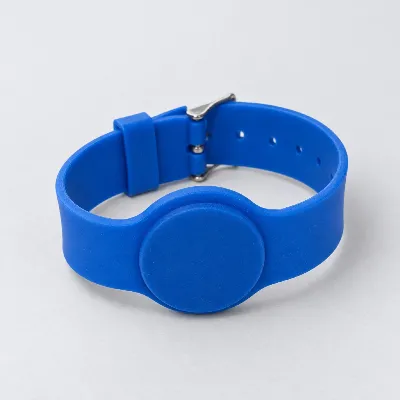
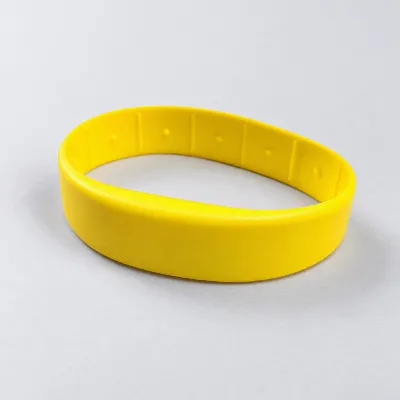
Waterproof, durable solution for gyms and event venues.
SetID Badge and Lanyard Set
A printed card and a lanyard in the same design in a single order.
Custom productionCan't find what you're looking for?
Send us your requests for metal cards, bamboo cards or custom sizes, and we will work out a solution together.
Featured products
The unit price decreases as quantity increases — the tiered price list is on the product page.
Double-Sided Printed 13.56 MHz RFID Card
Double-Sided Printed NFC Card
Double-Sided Printed Plastic Card
Double-Sided Printed 20 mm Lanyard - Single Hook
Silicone Wristband - 125 kHz (Proximity) - Watch Design - Blue
Silicone Wristband - 125 kHz (Proximity) - Yellow
Double-Sided Printed Lanyard, 20 mm, Double Hook
From order to delivery
Choose the product
Select the card type and quantity that fit your needs. The price is calculated instantly.
Upload the design
After payment, prepare your design in the online editor or upload your ready file.
Approve
Check and approve the pre-print proof. We do not start production without approval.
Receive
It is shipped as soon as production is complete. The time varies with order quantity and production workload.
Do you have a corporate order?
We set up a special price list for high-volume orders. Contact our team for sample requests and technical questions.
RFID / NFC card manufacturing steps
All our card types are produced in our own facility with state-of-the-art equipment.
RFID / NFC chip selection
RFID and NFC chips operate at different frequencies and have different features. We determine together the one best suited to your needs and application.
Plastic card design
The design of the card into which the chip will be integrated is prepared: dimensions, print areas on the card and numbering layout are finalised at this stage.
Printing and lamination
The design is printed on the card, then laminated under high heat and pressure in special machines. Images, logos, numbers and user information are permanently embedded between the card layers at this stage.
Proximity Card
To meet your needs, we offer you proximity cards with the latest technology. Proximity cards are designed using RFID technology that facilitates security and access control.
Thanks to RFID, an advanced wireless communication technology, our proximity cards transfer data effectively and speed up authentication processes. These cards can be used in offices, hotels, schools, hospitals and many other areas.
Proximity cards operate at 125 kHz and are used with TK4100 / EM-compatible readers; we explain the difference in the Difference between 125 kHz and 13.56 MHz cards guide. Their durable plastic body offers long service life; with customisable design options, we can print logos and numbers that reflect your brand.
13.56 MHz RFID Card
A 13.56 MHz RFID card is a smart card that uses the ISO/IEC 14443 A standard. Unlike a proximity card, which carries only a number, it can store data in its 1K byte memory. 13.56 MHz is not a chip brand; it is the operating frequency.
Fudan or original NXP? Our standard cards use a Fudan Microelectronics chip; these cards are not NXP products. Whether a card requested in the field as a "Mifare card" actually requires an original NXP chip is explained in the What is a MIFARE® card? Differences between Fudan and original NXP guide. For projects that require an original chip, a MIFARE Classic® EV1 1K chip card option is in preparation: not yet in stock, currently being sourced.
The same distinction applies to NFC cards: our phone-readable NFC cards use an equivalent NFC chip; we explain how it differs from the original NXP NTAG213 in the What is NTAG213? guide. Original NXP NTAG213 chip card is also not yet in stock; it is currently being sourced.
That is why they are used in applications where the card holds a balance or authorisation, such as hotel door locks, canteen and cafeteria payment systems, and campus and corporate ID cards.
Our cards are produced unprinted or with full-colour printing on one or both sides. If you need a link to be read by phone, an NFC card is more suitable.
MIFARE and NTAG are registered trademarks of NXP B.V. RFID İmalat is not an authorised distributor or partner of NXP.
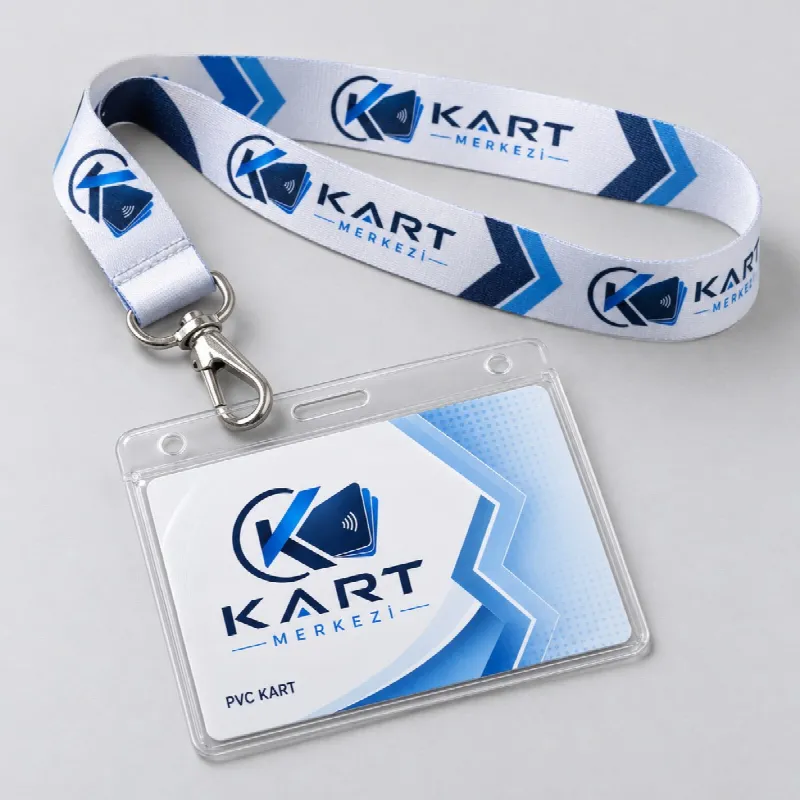
ID Badge and Lanyard
We produce staff, trade fair, congress and school cards together with printed lanyards. The card and the lanyard are prepared in the same design language, in the same order.
ID badge: a 9 × 11 cm portrait PVC card for trade fairs and events, a credit card size card for staff; a different name, title and QR code can be printed on each card. If it will also be used at turnstiles and doors, choose a proximity or 13.56 MHz chip card.
Lanyard (neck strap, badge lanyard): 15, 20 and 25 mm polyester satin ribbon, single or double-sided sublimation printing; wire, Paris or carabiner hook, neck safety lock and intermediate lock options.
Where we make a difference in production
High print quality
Full-colour, high-resolution RFID card printing with our digital printing system.
Fast delivery
With our high production capacity, your order is ready as soon as possible. The delivery date is confirmed based on order quantity and production workload.
Quality control
All finished cards go through quality control with special equipment.