What Is a Proximity Card?
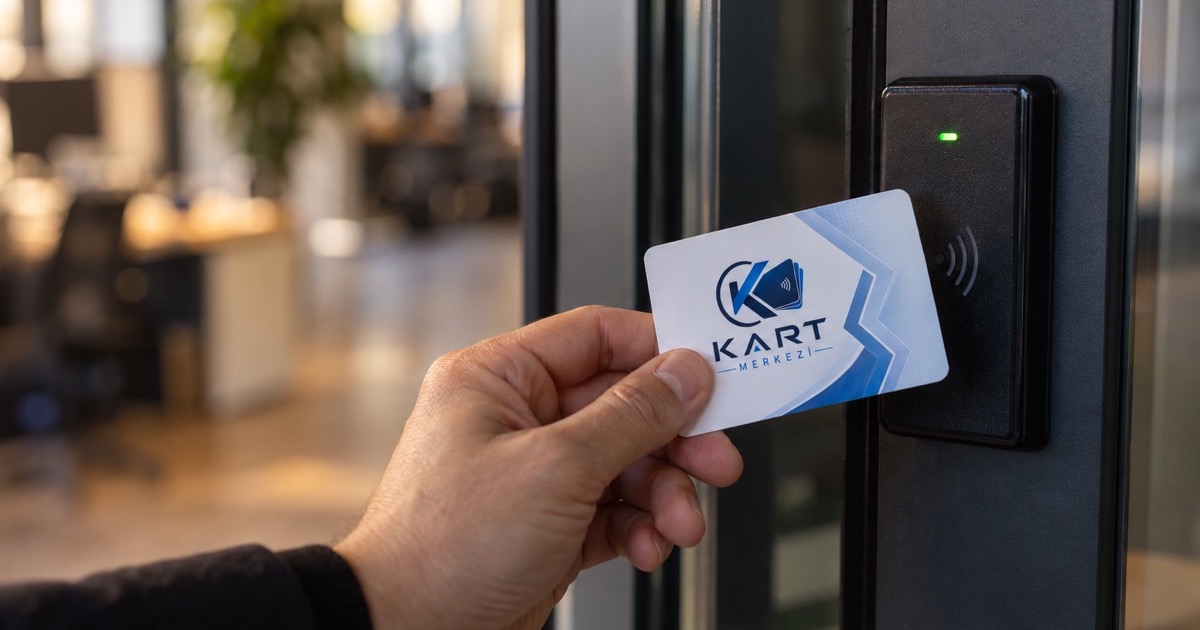
Short answer: A proximity card is a card with a 125 kHz low-frequency (LF) RFID chip inside, read contactlessly when held a few centimetres from a reader. The chip holds a card number that cannot be changed; it is used as an identifier in turnstile, door, car park and personnel time attendance (PDKS) systems. A proximity card is not an NFC card or a contactless payment card.
How does a proximity card work?
The reader emits a 125 kHz field. When the card enters this field, the chip draws its power from it (there is no battery in the card) and sends its card number to the reader. The reader passes the number to the system it is connected to; the system decides whether to open the door or log the entry. The card itself stores no permissions or balance; it only reports its identity.
Technical specifications
- Frequency: 125 kHz (LF)
- Chip: TK4100 in our cards; the number is in EM4100 format
- Memory: 64-bit, read-only card number; no data is written to the card
- Read range: a few centimetres, depending on the reader
- Size: ISO CR80, 85.6 × 54 mm (credit card size)
Where is it used?
- Turnstile access and gym entrances
- Residential complex and building entrances, door and lift control
- Car park barriers
- Staff cards and personnel time attendance (PDKS) devices
What a proximity card cannot do
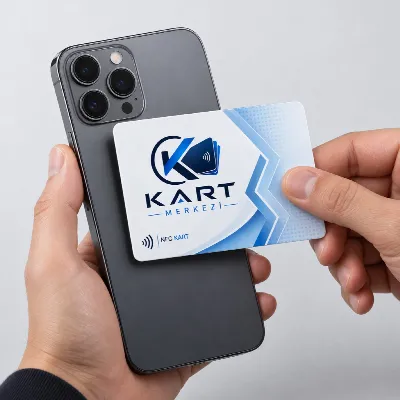
- It cannot be read by a phone (NFC); for a card that opens a link when tapped with a phone you need an NFC card.
- 13.56 MHz readers do not read proximity cards, and 125 kHz readers do not read 13.56 MHz cards.
- Because no data can be written to its memory, it is not used in systems that store a balance or permissions (canteen payment, hotel locks); these systems usually use a 13.56 MHz RFID card.
- It has no encryption: the card number is read unencrypted and can be copied with a suitable device. Where high security is required, ask your system provider which card you need.
Reader compatibility
Our cards work with 125 kHz EM compatible readers. Readers that only read the HID Prox or Indala format will not read these cards, even though they use the same frequency. If you are buying cards for an existing system, send us the type of one of your old cards or the reader model before ordering. For the frequency differences, see the 125 kHz vs 13.56 MHz card differences guide.
Ordering proximity cards
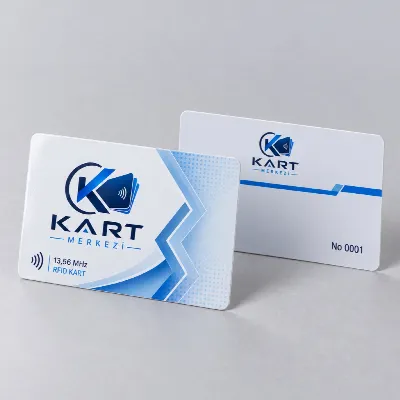
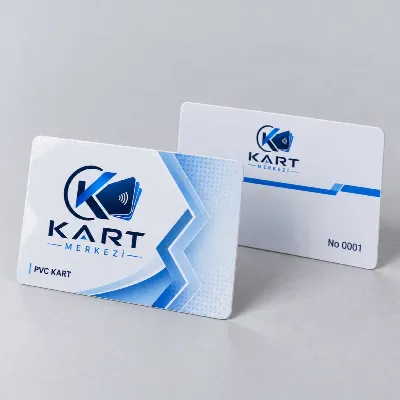
The cards are produced unprinted, with single-sided or double-sided full-colour printing; there is a variable data option for a different name or number on each card. The minimum order is 10 pieces for printed cards and 1 piece for unprinted cards; the unit price falls as the quantity rises. You can also buy the card as a set with a lanyard in the same design. All options: proximity cards.
Product on this page
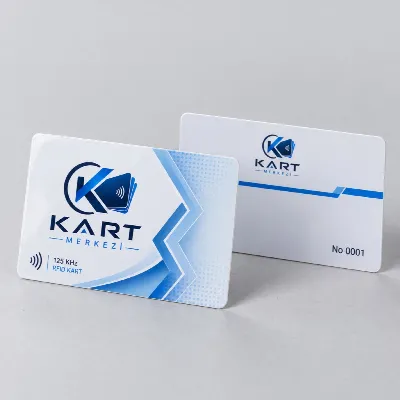
Double-Sided Printed 125 kHz Proximity RFID Card
Would you like support with this?
Let's determine the right card type together and send you a sample.